Petrol Analysis for Optimal Fuel Quality and Engine Performance
We can organise safe collection of your sample with specialist hazardous and flammable substances couriers and perform testing of your fuel for evidence of diesel, water, particulates and other common contaminants as well as determination of the ethanol content and other physical properties of the fuel. Our solution for these fuels is a complete one stop solution in that all you have to do is get your sample into a fuel safe container that we can also provide if you don't have them and we will organise collection and testing of your sample.
Ensure the highest standards of quality, safety, and environmental compliance for your petrol with our thorough analysis services. We conduct a series of tests to assess key characteristics, such as chemical composition and contaminants, to make sure your fuel performs optimally in modern engines .
Why Choose Our Petrol Analysis?
- Performance Optimization: Maximize fuel efficiency, reduce engine knocking, and enhance combustion for better engine performance.
- Engine Protection: Detect contaminants early to avoid engine damage and ensure long-term fuel system reliability.
Key Aspects of Petrol Analysis:
1. Physical Testi ng (ASTM D4052)
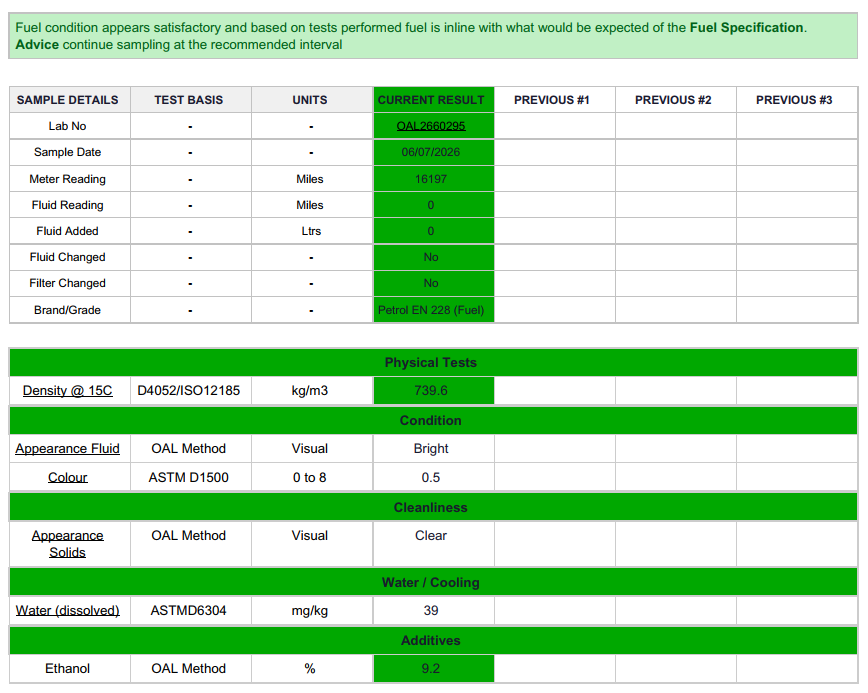
- Density: We measure the density of your petrol in kilograms per cubic meter (kg/m³), with a specification range of 0.720–0.775 kg/m³. This test helps ensure that the petrol is within industry-standard parameters for safe engine operation and fuel efficiency.
Contaminants Testing
2. Contaminants Testing (OAL Method)
- Appearance of Fluid: Petrol is evaluated on a scale from 0 to 8 to assess clarity and colour, with a higher score indicating a cleaner and more consistent appearance.
- Appearance of Solids: A visual inspection is carried out to identify any suspended solids that may affect fuel quality and engine performance.
- Diesel or Kerosene Contamination: This test measures the presence of diesel or kerosene in petrol. The contamination level is quantified as a percentage, with specifications ranging from -1% to 11%. Any contamination above the threshold can lead to significant performance and safety issues.
3. Dissolved Water Content (ASTM D6304)
- We measure the amount of dissolved water suspended within the petrol. This is expressed in milligrams per kilogram (mg/kg), with a specification range of -1 to 200 mg/kg. Excessive dissolved water can cause engine knocking, corrosion, and poor combustion.
4. Free Water (Crackle & CaH₂ Method)
- The free water test determines the percentage of water present in the fuel. The crackle and calcium hydride (CaH₂) method is used to measure this, with specifications ranging from -1%to 0.02%. Even small amounts of free water can cause engine malfunction or fuel system issues
5. Additives Testing (OAL Method)
- Ethanol Content : The percentage of ethanol in your fuel is measured using the OAL method. The specification range for ethanol content is -1% to 10%. Ethanol is commonly added to petrol to improve octane ratings, but excessive ethanol levels can impact engine performance and fuel system components.
- Ethanol measured as a percentage with the specification being between -1% to 10%
Example Report: